Before the ranch: the mission outpost
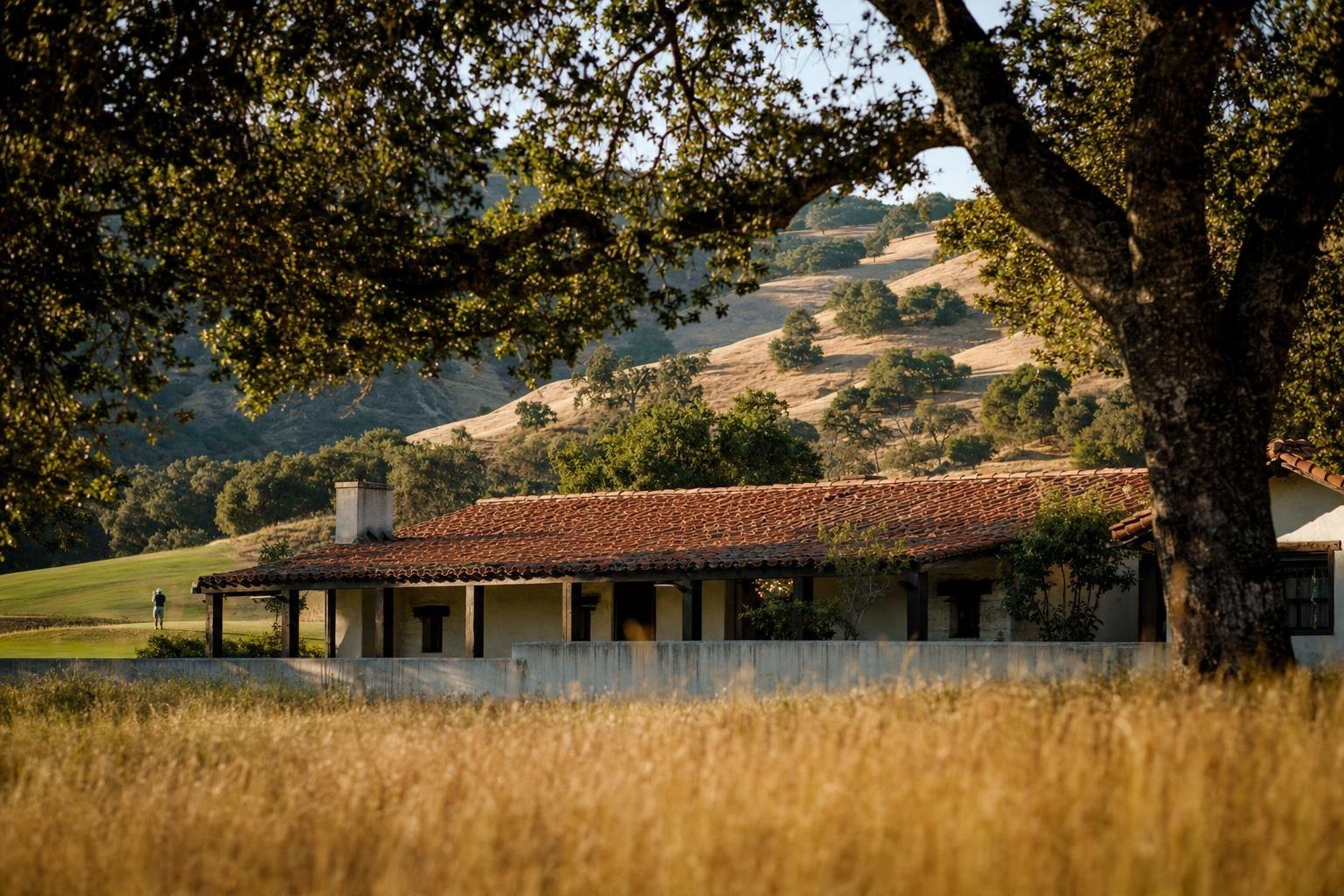
The written history of Rancho San Marcos begins with the missions. According to the course’s own history, the land first served as an outpost of Mission Santa Barbara, named for Fray Marcos Amestoy, one of the Franciscan friars of the mission. The same account lists what stood there: an asistencia with a chapel and living quarters, a granary, a wine cellar, vineyards and dwellings for Chumash people who worked the land.
No firm date is given for the outpost, and this guide does not invent one. The valley was Chumash country long before any mission. The course’s history speaks of archaeological evidence of more than 9,000 years of occupation; that figure comes from the course and has not been checked against an independent survey here.
The mission years also explain one number that still follows the property around. For a long time the ranch and the golf course used the year 1804 in their branding, and the old logo read “est. 1804”. The year is long associated with the ranch, but historical records found for this guide do not show a land grant in 1804. The grant came later, under Mexican rule.
The 1846 Mexican land grant
On 8 June 1846 the Mexican governor of Alta California, Pío Pico, granted Rancho San Marcos to Nicholas and Richard Den. The grant covered 35,573 acres of the upper Santa Ynez Valley, and the recorded price was $750 in gold. Within months the Mexican-American War had reached California, so the grant belongs to the very end of Mexican rule.
The Den brothers had come from Ireland in the 1830s. Nicholas Den was already a known figure in Santa Barbara, and the ranch became part of a large family holding. The grant’s size helps explain why later owners could still buy thousands of acres a century on: Rancho San Marcos was never one small farm but a wide piece of river valley, oak hills and high ground.
Nicholas Den died in 1862. The next two years brought one of the worst droughts in California’s ranching history, from 1862 to 1864, and the great cattle herds of the region collapsed. For many families who held old grants, that drought marked the end of the rancho era.
The Den heirs, William Pierce and F.W. Mathiessen
In 1868 William Pierce of the neighbouring Tequepis Ranch bought Rancho San Marcos from the Den heirs. The sale moved the ranch out of the grant family and into the hands of the American settlers who were reshaping the valley after the drought.
A later owner was F.W. Mathiessen. Records found for this guide say little more about his time on the ranch, and the history here does not fill the gap with guesses. What is clear is that through the last decades of the nineteenth century the property stayed a working ranch, with the valley floor used for grazing and the river giving water through the dry months.
The same years brought a road that would change how people reached the valley at all.
The Santa Ynez Turnpike and the stagecoach years
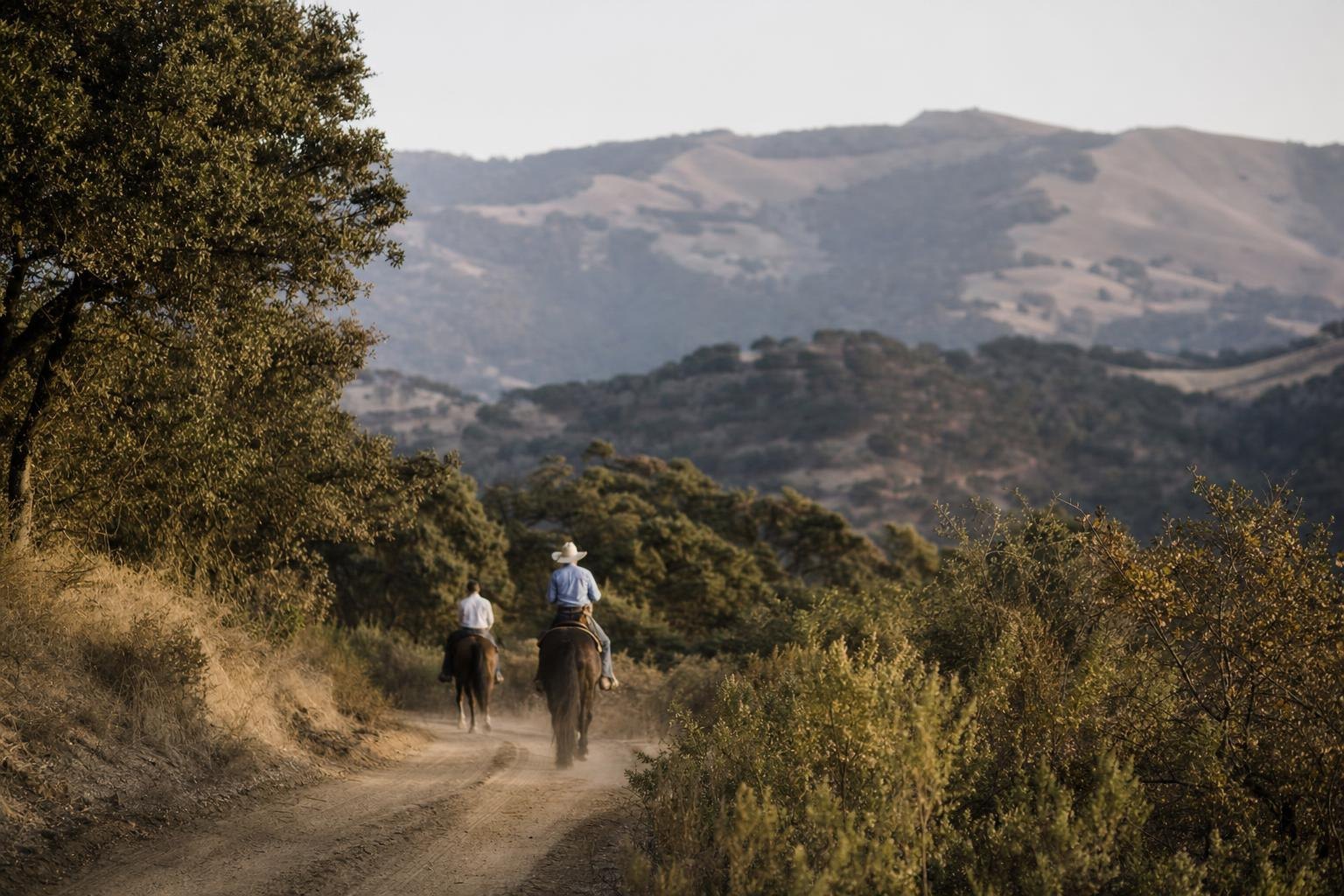
In 1868 Chinese workmen built a road over San Marcos Pass, linking Santa Barbara with the Santa Ynez Valley. From 1869 to 1901 it ran as a toll road, the Santa Ynez Turnpike. It was about 25 miles shorter than the coast route, and the stages of the Flint and Bixby line used it, pulled by six-horse teams.
Rancho San Marcos lay on that route. Stages coming down from the pass crossed ranch land on their way into the valley, and part of the original stagecoach trail still runs through the golf course today. When Robert Trent Jones Jr. laid out the holes in the 1990s, he kept that trail inside the routing instead of grading it away, and the seventeenth hole on the old card was named Stagecoach.
The turnpike also left its mark on the road most visitors still use. Highway 154, the modern route over San Marcos Pass, follows the same general line between the coast and the valley, and the course entrance sits on it.
Dwight Murphy, palominos and Herefords
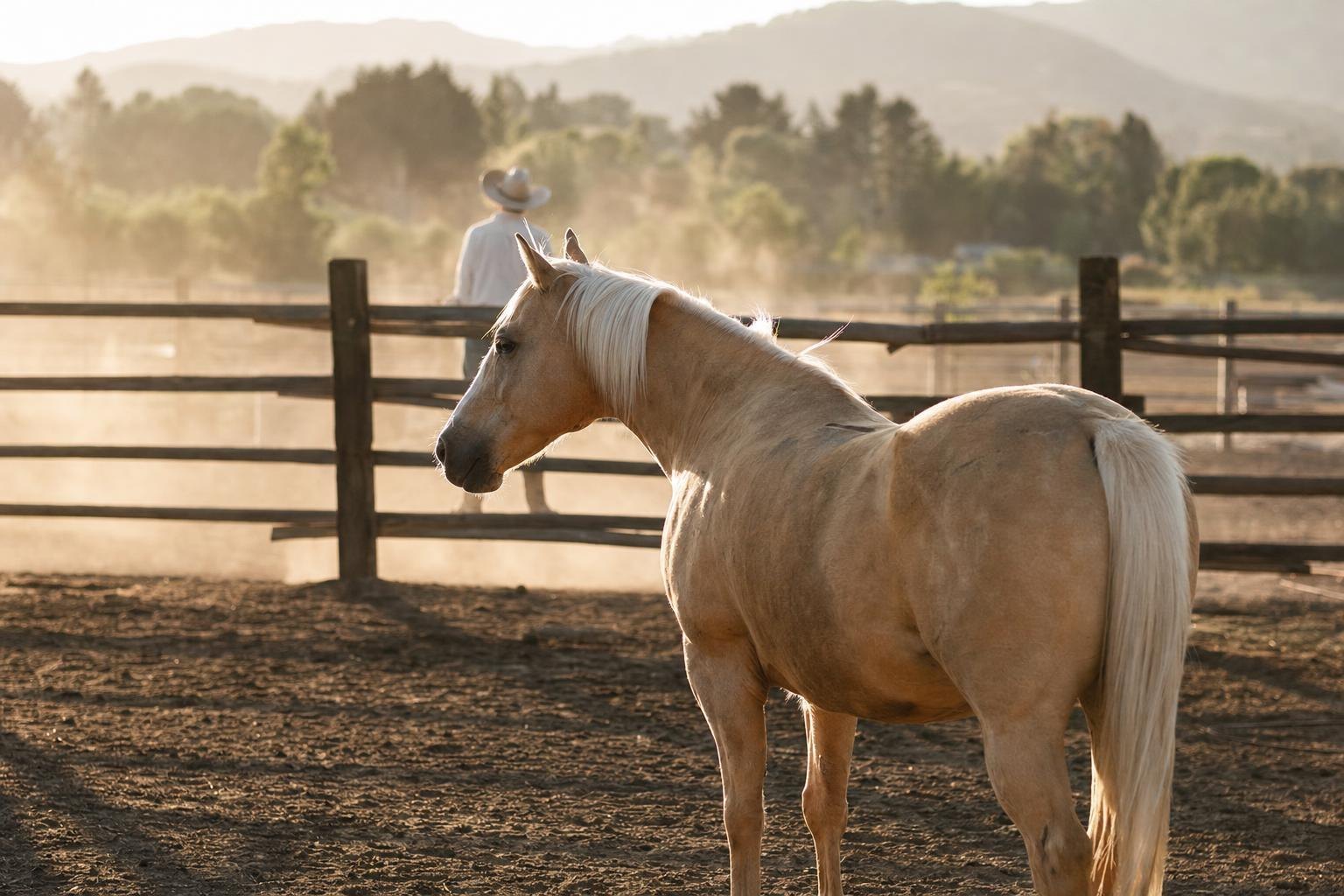
In 1938 Dwight Murphy bought 7,000 acres of Rancho San Marcos. Murphy was best known for his palomino horses. His golden horses appeared in the Rose Bowl parade and in Santa Barbara’s Fiesta parades, and the ranch’s history links them with the actor Leo Carrillo. On the same land Murphy raised registered Hereford cattle.
The Murphy years gave the ranch a public profile it had not had before. A Santa Barbara crowd watching the Fiesta parade could see horses raised on the other side of the pass, and the name Rancho San Marcos travelled with them. Several things in the later golf course point back to this period: a hole called Corral, another called Ranchero, and a ranch-house mood that the clubhouse kept for decades.
In 1948 Murphy sold most of the land to Lewis Welch and kept about 700 acres. From then on, Rancho San Marcos as a name referred to a much smaller ranch than the 1846 grant.
Robert S. Odell and forty years of cattle and hay
In the mid-1950s Robert S. Odell bought the ranch. Odell was the head of Allied Properties, a company that owned well-known hotels, among them the Santa Barbara Biltmore and the Clift Hotel in San Francisco. (Sources disagree on whether the purchase was in 1955 or 1956, so this guide gives the decade.)
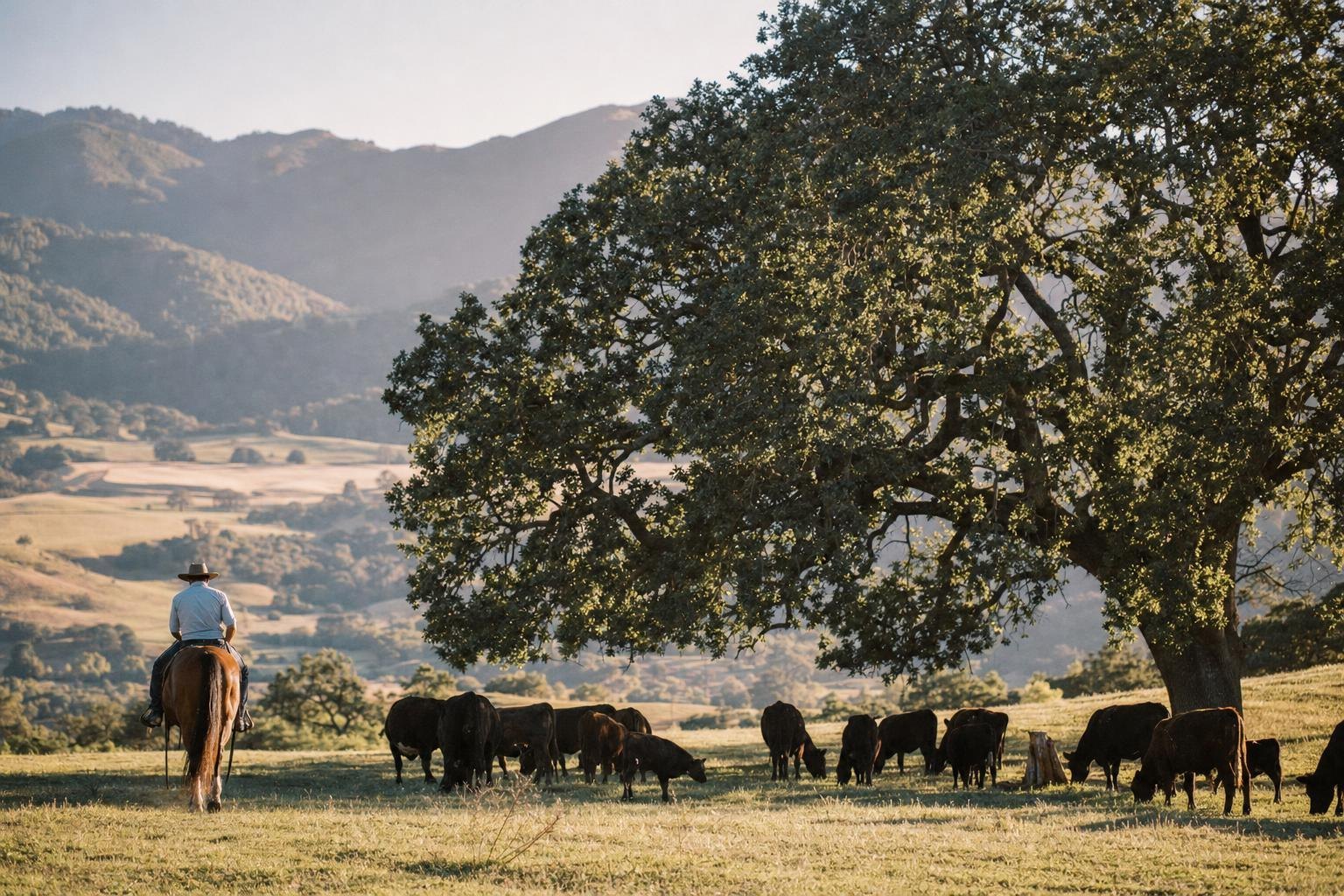
Under Odell the ranch stayed a ranch. For more than forty years it produced cattle and hay, and that long, quiet period kept the land open. The oaks, the old adobe buildings and the stagecoach trail survived because nothing much was built over them. When golf came in the 1990s, it came to ground that had changed very little since the Murphy era.
The golf course, 1998 to 2020
The golf course opened in January 1998. Robert Trent Jones Jr. designed eighteen holes, par 71, measuring 6,939 yards from the black tees, on about 300 acres of the ranch. The routing climbed through three zones, from the valley floor near the Santa Ynez River to a ridge above Lake Cachuma, and kept nineteenth-century adobe structures, the stagecoach trail and the old oaks inside the course. The golf course profile explains how that design plays.
Ownership changed quickly. In 2001 the course, described at the time as financially ailing, was sold to Premier Golf International for $12.5 million. In 2005 Ty Warner bought it, the same year he bought the Miramar hotel property in Montecito; he also owns Sandpiper Golf Club in Goleta. A renovation followed in 2007.
The years after the renovation were the course’s best documented. Recognition from that period includes:
- Golf Magazine’s Top 10 Places to Play, 2002
- Golf Digest’s Places to Play, four and a half stars in 2003, 2004, 2008, 2009 and 2010
- Greenskeeper.org, best playing conditions in Santa Barbara County, 2008 to 2011
- Golf Inc., finalist for Renovation of the Year, 2008
Through those years the clubhouse ran Davy’s Stable Cafe, known for lunch and tri-tip barbecue, and the course hosted tournaments and weddings. The hole-by-hole layout of that eighteen is preserved on the Rancho San Marcos scorecard and in the course tour.
Closure, the 2022 sale and the 2025 reopening
The course closed in 2020. In June 2021 three 100-acre parcels on Highway 154, described as the site of the former Rancho San Marcos golf course, were listed for $12 million. They sold in 2022 for $8.75 million. Public reports from that time did not confirm the buyer, and this guide does not name one.
For the next few years the land sat quiet, and many golfers assumed the course was gone for good. Then in April 2025 Rancho San Marcos reopened with nine holes, the original front nine of the Jones design. The reopened card measures 3,501 yards from the back tees and plays to par 35, and the general manager has said he expects the course to stay at nine holes.
That makes the present course the newest chapter in a long chain. A mission outpost, a Mexican grant, a stagecoach road, a palomino ranch and a cattle and hay operation all left something on the ground, and golfers walking the nine today pass through most of it. Rates and opening days for the current course are collected on the green fees page, and the course itself is the place to confirm them before a drive over the pass.
History written into the hole names
The clearest record of the ranch on the golf course is the scorecard itself. When the course opened in 1998, each of the eighteen holes received a name, and most of them point back to a person, a place or a working part of the old ranch rather than to golf.
Some names describe ranch life. Corral, Ranchero, Twin Oaks and Davy Stables on the front nine, and Old Headquarters on the back, read like the labels on a ranch map. Vineyard, the opening hole, recalls the vineyards listed in the mission outpost’s history. Stagecoach, the seventeenth, sits on the theme of the turnpike years.
Other names reach wider. Figueroa and San Fernando carry Spanish place names of the region, Santa Ynez names the river and the valley, Hot Springs opens the back nine, and Los Padres, the eighteenth, takes the name of the national forest on the ridges to the north. Mesa, Eagle’s Nest and Bear’s Back describe the high ground of the back nine.
Only the front nine is in play today, so golfers now walk Vineyard through Davy Stables. The back-nine names survive on paper, which is one more reason the scorecard page keeps the full card on record.
A short timeline
- Mission era: outpost of Mission Santa Barbara, named for Fray Marcos Amestoy.
- 8 June 1846: Mexican land grant from Pío Pico to Nicholas and Richard Den, 35,573 acres.
- 1862 to 1864: Nicholas Den dies; drought ruins much of the region’s cattle trade.
- 1868: William Pierce buys the ranch from the Den heirs; work begins on the San Marcos Pass road.
- 1869 to 1901: the Santa Ynez Turnpike runs as a toll road.
- 1938: Dwight Murphy buys 7,000 acres; 1948: most of it sold to Lewis Welch.
- Mid-1950s: Robert S. Odell buys the ranch; cattle and hay for more than forty years.
- January 1998: the Robert Trent Jones Jr. golf course opens.
- 2001: sale to Premier Golf International; 2005: Ty Warner buys the course.
- 2020: closure; 2022: three parcels sell for $8.75 million; April 2025: nine holes reopen.
For other courses in the same part of California, from the oceanfront holes at Sandpiper to the city course on McCaw Avenue, see the Santa Barbara golf courses guide.