
Bell’s oceanfront course from 1972
Sandpiper opened in 1972 on the coastal terrace at the western edge of Goleta. Its designer, William F. Bell, is best known for Torrey Pines in San Diego, and the two courses share a type: public golf on bluffs above the Pacific, with the cliff holes as the reason people travel.
The land had an industrial past before it became a golf course. It was part of the Ellwood Oil Field, and the City of Goleta’s environmental review for the renovation lists 13 abandoned wells on the site. Little of that shows from the fairways now. What a golfer sees is a long, open coastal course with the ocean in view from much of the back nine.
Bell also has a second connection to the area. Before Sandpiper, he designed the Ranch Course at the Alisal in Solvang, which opened in 1955 and remains private. For the public round in the valley, see the River Course at the Alisal.
The layout and the bluff holes
Sandpiper plays to par 72 over 18 holes. The fairways and greens are rye grass, which suits the cool coastal climate. The tee sets are:
- Black: 7,159 yards, rating 75.1, slope 136
- Gold: 6,646 yards, rating 72.8, slope 131
- Silver: 6,196 yards, rating 70.4, slope 127
- Copper: 5,602 yards, rating 68.4, slope 121
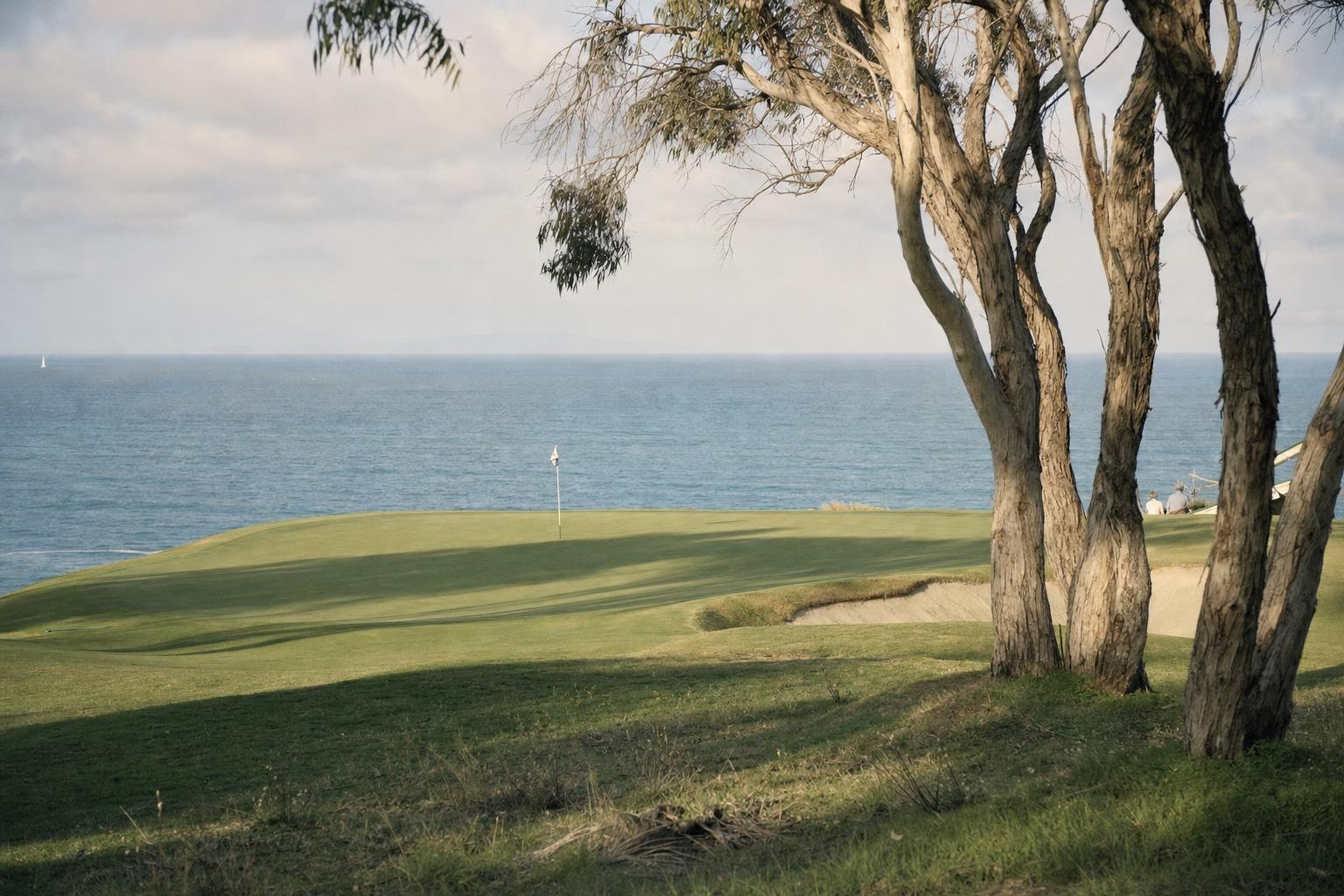
The front nine sets the tone with length rather than drama. The back nine is where the course earns its name. Reviewers on GolfPass single out the 11th, a downhill par 3 that drops toward a green close to the beach, and the run of holes from 12 to 14 that follows the coastline. On those holes the wind off the water decides club selection as much as the yardage does.
From the black tees the course is a serious test. Its 75.1 rating is higher than par, and players who choose the back tees on a breezy afternoon should expect to give some shots back. The gold or silver tees are the better choice for most visitors.
The Tom Doak renovation plan
Sandpiper has been waiting for a redesign for a long time. The owner, Ty Warner, commissioned a master plan from the architect Tom Doak in 2009. According to a detailed report by Garrett Morrison in The Fried Egg in October 2025, the project had by then spent about two decades in permitting.
Doak’s plan keeps many of Bell’s corridors and all of the clifftop holes. The main changes would be:
- The par-5 13th split into a par 4 and a par 3
- The uphill 14th reversed to become a downhill 17th
- The driving range moved to a new spot
- The closing par 3 over the pond turned into a short-game area
- A new clubhouse by Winick Architects, with a coffee shop, and the historic Barnsdall Rio Grande Gas Station restored
The City of Goleta posted the draft environmental impact report on October 16, 2025 and took comments until December 1, 2025. The new clubhouse in the plan would measure 37,179 square feet, against 9,305 today, with 162 parking spaces. The City Council makes the final decision. Doak told The Fried Egg that there was still no timetable, and as of October 2026 none has been announced.
What the renovation means for a visit now
For now, Sandpiper plays as Bell’s course with the current clubhouse. The Goleta process concerns future construction, and no closure has been announced. A golfer booking a round in 2026 is playing the layout described above.
That may change once the city decides. A large project of this kind usually means a period with fewer holes in play or a full closure. Anyone planning a trip around Sandpiper, especially a group outing months ahead, should ask the course whether any work is scheduled before committing. This guide will treat the plan as a plan until the course itself announces dates.
The renovation also explains why some reviews mention an older clubhouse and practice area. Those are the parts Doak’s plan would replace, while the golf on the bluffs, which most visitors come for, stays the same.
Choosing tees and playing the coastal wind
The four tee sets at Sandpiper span more than 1,500 yards, from 5,602 on the copper tees to 7,159 on the black. That spread is wider than at most public courses in the county, and it gives every player a sensible option. A useful rule is to pick the set where the course rating sits closest to the score a golfer normally shoots. For many visitors that means the silver tees at 6,196 yards, rated 70.4.
Wind is the other variable. On the bluff holes it usually blows off the water, so the same par 3 can need two or three clubs more from one day to the next. Low, running shots hold their line better than high ones, and a ball short of the green on a firm coastal course often rolls on. Players used to soft inland greens should allow for that.
Reading the back nine before teeing off helps too. The stretch from the 11th to the 14th is where most rounds at Sandpiper are made or lost, and it rewards a steady plan more than a heroic one.
Green fees and planning a round
Sandpiper runs its own tee sheet and sets its own green fees, which vary by day of the week, time of day and season. This guide does not quote prices for it. The course sits at the top end of public golf in the Santa Barbara area, as oceanfront courses usually do, so it is worth checking the current rate card on the course’s own website or with the pro shop before booking.
A few practical points help:
- The address is 7925 Hollister Avenue, Goleta, CA 93117, close to Highway 101 at the western end of town.
- Morning rounds on the coast often start under marine layer, especially in early summer. The bluff holes can look very different by the time the back nine comes round.
- Twilight times, where offered, are the usual way to lower the cost of a round here.
- Ask about cart rules and pace of play when booking, since a full round on a long coastal course takes time.
Sandpiper sits a few minutes from Glen Annie, which makes a second Goleta round easy to add.
How Sandpiper compares with Rancho San Marcos
Sandpiper and Rancho San Marcos are separated only by San Marcos Pass, but they feel like different regions. Sandpiper is a coastal links-style round: open, windy and long, at par 72 and 7,159 yards from the back. Rancho San Marcos is a Robert Trent Jones Jr. design in the Santa Ynez Valley, opened in 1998 on ranch land that climbs from the river through oak country to a ridge above Lake Cachuma.
The two also differ in what is on offer today. Sandpiper plays a full 18. Rancho San Marcos reopened in April 2025 with nine holes in play, which suits a shorter round or a golfer who wants an afternoon free for the wine country around Santa Ynez and Los Olivos.
A sensible two-day plan is Sandpiper first, while staying on the coast, then a drive over San Marcos Pass for the valley. The Santa Barbara golf courses guide sets out all six public options side by side, and the Santa Barbara Golf Club is the closest alternative in town on a day when Sandpiper’s tee sheet is full.